
Netflix’s Long Story Short Reinvents the Family Sitcom

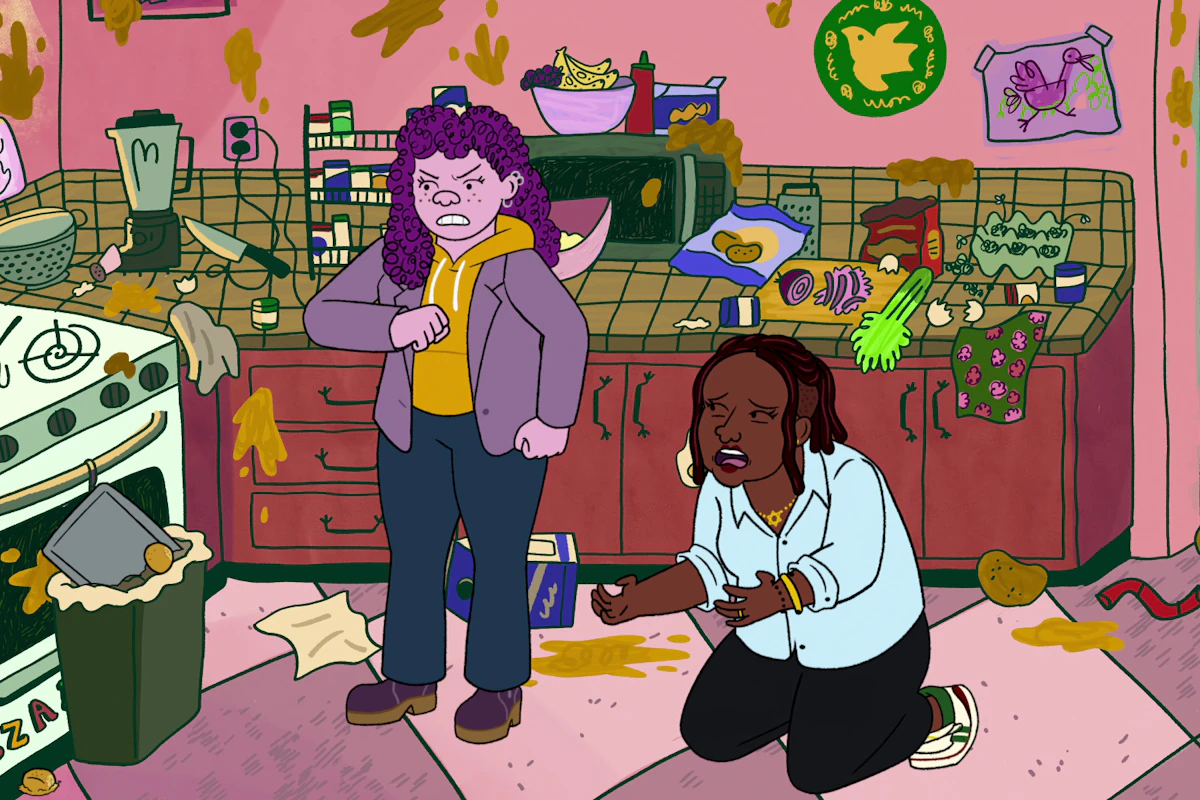
There’s no voiceover narration in Long Story Short, the new animated coming-of-age comedy from BoJack Horsemancreator Raphael Bob-Waksberg. Nor is there any settled sense of safety, a voice reassuring us everything turns out OK. And while the show’s opening credits sequence, filled with photo-album spreads of suburban youth, nods to the Way We Were aesthetic of The Wonder Years, Long Story Short is a far more tart and untidy work of memory. Don Draper famously told us, on Mad Men, that nostalgia means “the pain from an old wound.” Part of the wonder of Daniel Stern’s performance is how he makes that pain quietly available as a gentle undertone to the show’s broader atmosphere of warmth and fuzziness. Long Story Short—which is sentimental, open-hearted, and hilarious but never quite warm and fuzzy—puts the pain front and center, whipping us around and around through time, like a carousel of old wounds.
Long Story Short follows a middle-class Jewish family, the Schwoopers, from the 1980s to the present, jumping around from year to year, slowly accumulating the story of this family and their significant others in aggregate. Avi (Ben Feldman), our quasi-protagonist, grows from a rascally child to a charming music nerd of a teen to a selfish shit of a thirtysomething to a miserable middle-aged divorcee. Middle sister Shira (Abbi Jacobson) suffers young heartbreak after heartbreak, and eventually finds love, but only by getting as far outside the family as she can. And lost, loser youngest sibling Yoshi (Max Greenfield) wanders aimlessly through life until he is, eventually, found in an unexpected place.
Most of the show’s shambling throughlines involve the siblings’ varied relationships with their mother, the imposing and impossible Naomi (Lisa Edelstein). Beloved Avi resents his mom’s smothering affection but struggles to fully rebel, Shira yearns for approval only to be denied at every turn, and Yoshi’s failure to launch makes him a constant disappointment. To the show’s credit—as well as to Edelstein’s, who delivers a bravura tragicomic voice performance—Naomi only ever plays with the stereotype of the domineering Jewish matriarch. The character never truly succumbs to that caricature. Her children repeatedly cast her as the villain of their stories—as might lesser writers—but, as episodes roll on, it becomes clear that Naomi is the show’s big, bitter, beating heart.
Originally published by newrepublic.com. Syndicated material does not necessarily reflect the views of Vanity Fair Fashion.


