
From Code to Curse: How Specialized Rigging Systems Delivered the Defining Visual Effects of Weapons
The world of visual effects demands technical mastery and creative problem-solving, a dual challenge Zhehao Qiao embraced as the Lead Rigger on the film Weapons. The project required creating digital doubles for characters undergoing supernatural transformations and performing high-stakes physical actions, pushing the boundaries of character rigging. His work was pivotal to three critical sequences: the “cursed” digital face replacements, a robust full-body double for the character Marcus, and a complex, specialized skin-peeling effect.
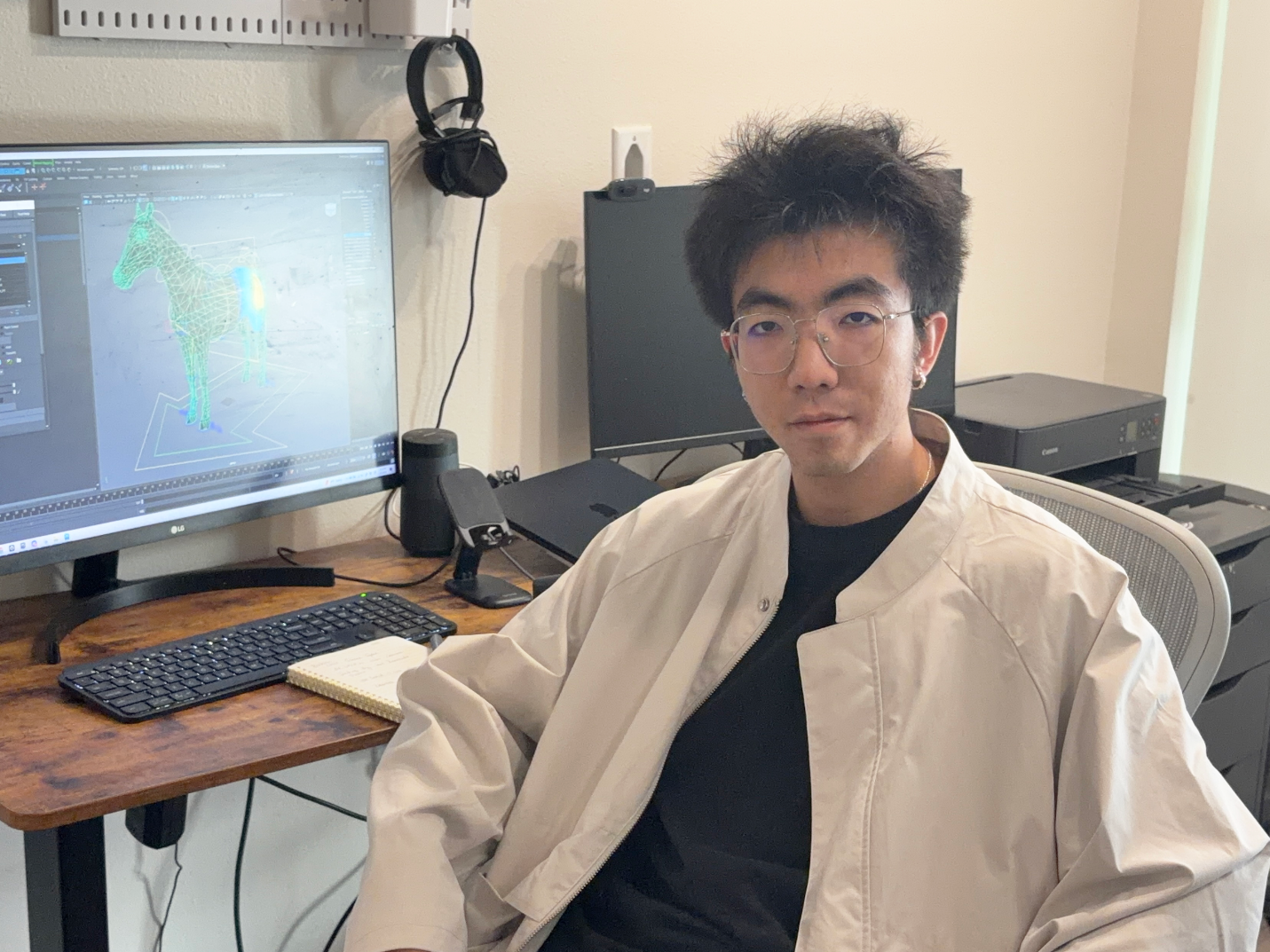
Qiao’s philosophy for managing the rigging team on such a unique and demanding project is to protect the team’s energy and maximize their focus on quality. A large part of the work involved creating similar digital double setups, which could lead to disengagement among artists. His strategy was to automate mechanical, repetitive tasks by turning them into custom tools and scripts, thus allowing artists to focus their time and energy on the creative details that truly mattered, such as refining subtle facial deformations around the enlarged eyes or ensuring the overall believability of a performance. He also fostered a strong sense of responsibility by ensuring that the same artist maintained ownership of a character from start to finish, consistently leading to higher-quality results. This focus on tool development proved to be the project’s most significant lesson, with Qiao reducing a week of manual work to a single day by modifying an auto-facial rigging system. This efficiency gain allowed the team to focus on refining deformation quality, skin behavior, and muscle feel.
The successful delivery of the digital doubles required a constant, iterative collaboration with the modeling and animation departments. With modelers, the process began by integrating initial sculpts, which often revealed issues such as eyelids collapsing into the enlarged eyeballs once the rigs were put in motion. Qiao’s team provided clear notes to modelers and added extra rigging layers to support the modified shapes, drawing on his experience to provide early guidance and flag high-risk expressions before the assets moved down the pipeline. With animators, the collaboration was a continuous feedback loop. As they worked on shots, animators frequently needed shot-specific controls—for instance, a tool to subtly shift a feature, such as the nose, to better align with the original plate photography. Qiao’s team would adapt the rig by adding new ‘tweaker’ controls, allowing animators to fine-tune micro-movements and ensure the digital face faithfully translated the actor’s original performance. Qiao ensured this back-and-forth process was transparent, setting the expectation early that revisions would be needed, which maintained a positive team atmosphere and helped everyone plan their time more effectively.

The film’s central visual effect, characters with enlarged and protruding eyes, required full digital face replacements and was the source of the most significant technical hurdle. Because the eyes were so large, the surrounding geometry and eyelids were severely compressed, resulting in frequent intersections and unnatural deformation, especially when multiple expressions were combined. To solve this, the team developed rig-side solutions that went beyond simple modeling fixes by incorporating intermediate shapes and combination corrections that activated only at specific values (e.g., 50% of a blink) or when two expressions were active simultaneously. They also had to create specialized systems that allowed the eyes to shift position or change size in 3D space while still maintaining anatomical believability. This balance—fixing technical problems while preserving the original expression—was critical to maintaining realism, and its success was validated by standardized range-of-motion (ROM) tests, which ran the rig through common facial expressions to check for stability.
In addition to the facial work, Qiao oversaw two other demanding technical assets. The full-body rig for the character Marcus, built on the team’s component-based auto-rigging system, needed to withstand extreme, non-anatomical joint angles in sequences such as violent strikes and throws. While it was a simpler biped rig than the facial replacements, it required significant, detailed, character-specific corrective work to ensure muscles visibly tensed and bulged under strain and that the deformation held up under the character’s larger size and the extreme poses required by the animation. Finally, for the complex sequence where a character’s facial skin is peeled away, Qiao adapted an existing system for tentacles and tails, treating the skin as a flexible object attached to an invisible path to achieve a smooth, organic peel. Crucially, he added a second, custom-built rigging layer to the tip of the peeled skin, which allowed it to roll up into a tight, unsettling curl, a movement the base system could not naturally achieve. To ensure believability, he built limits directly into the rig controls to prevent the skin from stretching so far that its texture would break the illusion.
Looking back at Weapons, Qiao is most proud of the eye effects, which validated the strength of their auto facial rigging system and required constant custom work and communication with other departments. Seeing the final result and the audience reaction confirmed that the technical innovation successfully contributed to one of the film’s most memorable visual effects.
Originally published by under30ceo.com. Syndicated material does not necessarily reflect the views of Vanity Fair Fashion.


