
Everybody Hates Trump Now
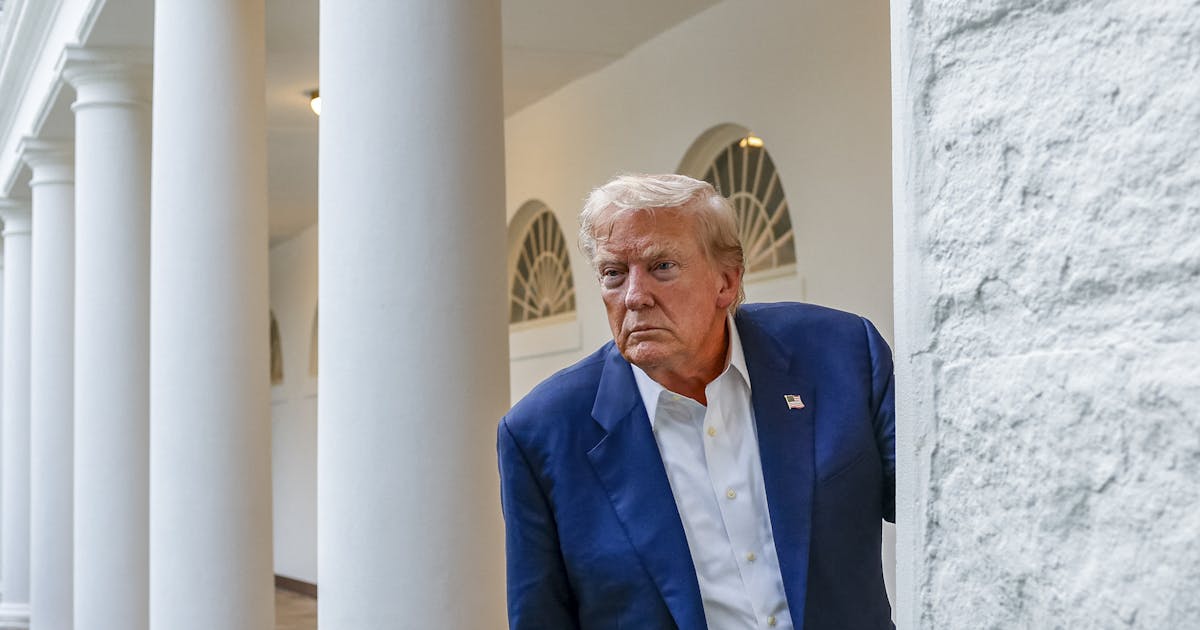

Today, just six months into Trump’s second term, things look very different. Voters still hate Democrats: A Monday Wall Street Journal poll found that 63 percent of voters had an unfavorable view of the party, the lowest figure on record. But, increasingly, voters hate Trump too. A lot. And it’s not just his new voters: Trump’s MAGA base is showing signs of wavering for the first time since the January 6 insurrection, thanks to his handling of the controversy over Department of Justice files related to the late financier Jeffrey Epstein, the convicted pedophile and accused sex trafficker who was Trump’s close friend for nearly two decades. Everywhere you look, Trump’s support is collapsing.
The credulous Beltway press has long depicted Trump as a singular marketing genius: the “Michael Jordan of name-calling” and the country’s arch purveyor of political merchandise (hats with 40-year-old slogans on them). There is a touch of truth to this; Trump has a Barnumesque knack for generating attention, and his tendency to play to the crowd means he can run laps around most focus group–tested messaging. But it has always been overstated. The nicknames are almost all clumsy and cringeworthy (just look at “Panican”); his political slogans have a (similarly) remarkably low hit rate. In both cases, his winners—or at least those with a long shelf life, such as “Build the Wall,” “Crooked Hillary,” and “Make America Great Again”—date back to the early days of his first presidential run.
Trump’s real talent isn’t for moving voters to where he is but identifying where voters are—and then saying what other political leaders are too afraid to say. His rapid rise within the Republican Party came from simply recognizing that the party’s voters were significantly further to the right on immigration than most of the party’s presidential candidates. Trump parroted back to voters what they were already saying about undocumented immigrants, and he rapidly rose in the polls. More recently, Trump has succeeded by pushing messages that resonated with groups whose loyalty to the Democratic Party was less than absolute. In 2024, he argued that the political elite was out of touch; that it took young, Black, and Latino voters for granted; and that he—given his unorthodox foreign policy, to describe it favorably—could end the genocide in Gaza. He also shrewdly aligned with Robert F. Kennedy Jr., a scion of the nation’s most famous Democratic family whose base was loosely correlated with support for Democrats: Trump won his endorsement by promising him real power, and likely won a substantial number of votes as a result.
Originally published by newrepublic.com. Syndicated material does not necessarily reflect the views of Vanity Fair Fashion.


