Icons Only: From Glastonbury to Balmoral, Barbour's Wax Jacket Is an Unlikely Fashion Icon
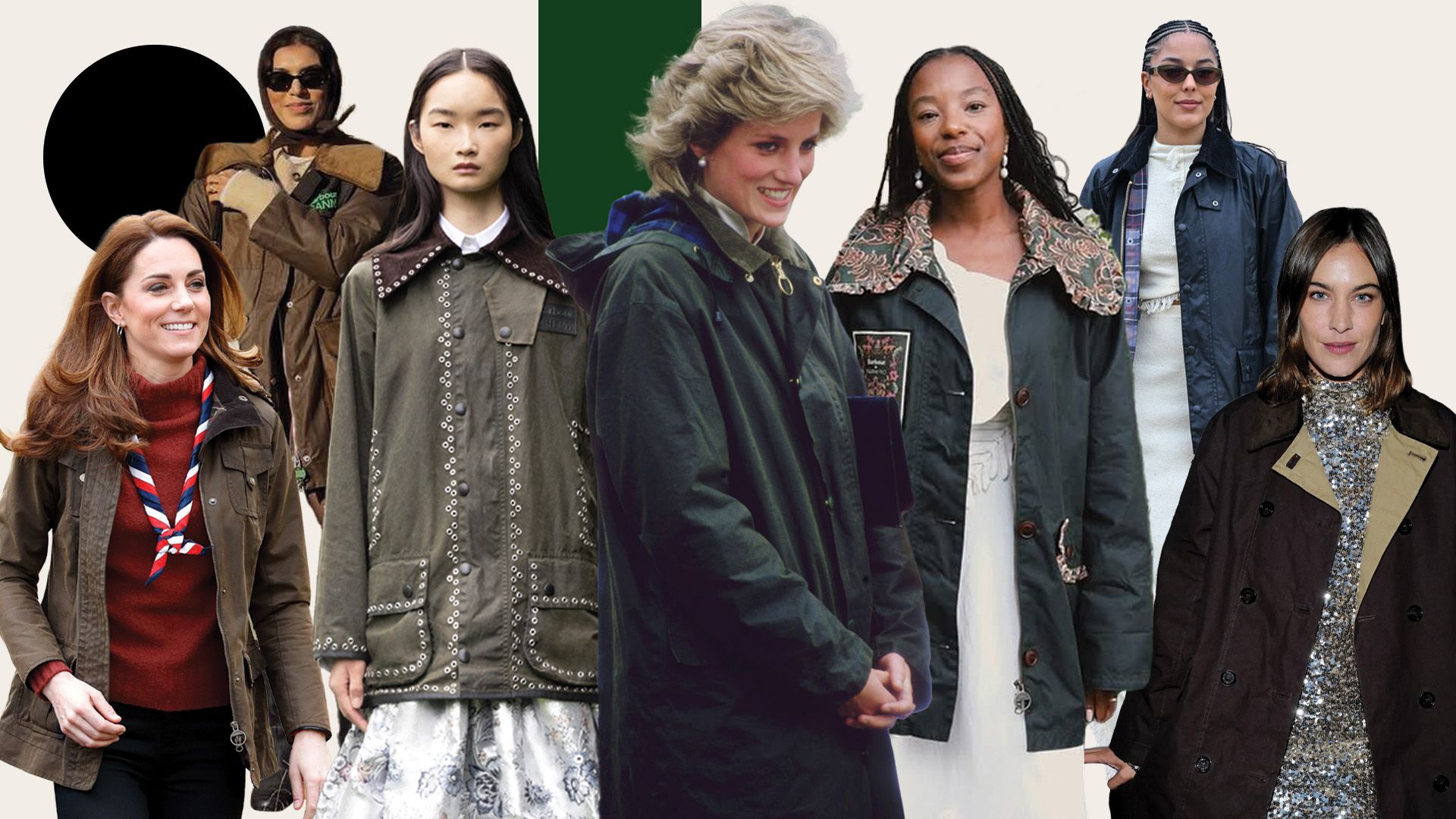
The Barbour wax jacket is far more than just a wet-weather staple. It’s about as British as pie and mash and beloved by everyone from the royal family to It girls at Glastonbury. Synonymous with the English country-dwelling upper classes, it’s a symbol of heritage and tradition, and over the years, its appeal has widened to make it a most unlikely fashion icon.
Barbour’s long relationship with waxed cotton began back in 1894, when Scotsman John Barbour opened a shop in the Market Place in Newcastle’s South Shields, selling practical and hard-wearing oilskins for hunting and fishing. Strictly utilitarian, the jackets featured pockets for storing cartridges, "thorn-proof" wax coating for scrambling through brambles and even large game pockets capable of storing an entire pheasant.
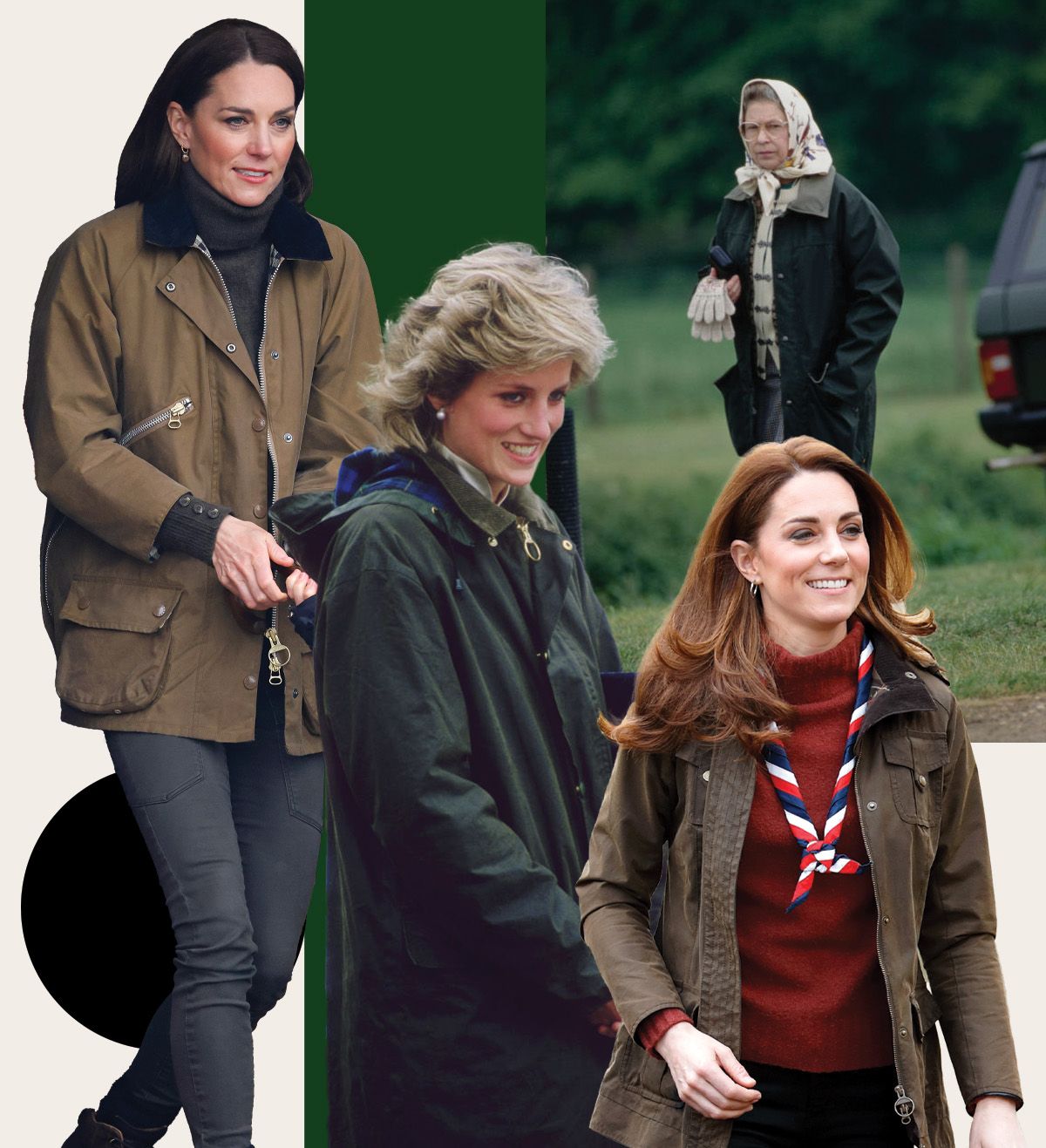
In 1972, Dame Margaret Barbour took over the family business, and Barbour’s golden age began. Amongst its most famous poster girls was Princess Diana, who, clad in her Barbour jacket and pearls, helped popularise the garment as a key part of the Sloane Ranger uniform. Over time, these jackets develop a shabby-chic patina, and traditionally, there is a cachet attached to a well-worn Barbour.
The late Queen Elizabeth II famously wore the Beaufort style for over 25 years, particularly around her Balmoral estate, and declined offers to replace it, preferring to have it re-waxed instead. King Charles III has also frequently been spotted sporting a Barbour jacket at multiple outdoor events, whilst Catherine, Princess of Wales, is a regular Barbour wearer. Her favourite and most worn style is the Barbour Defence Wax Jacket, but she also owns the Barbour X Alexa Chung Edith Jacket in beige.
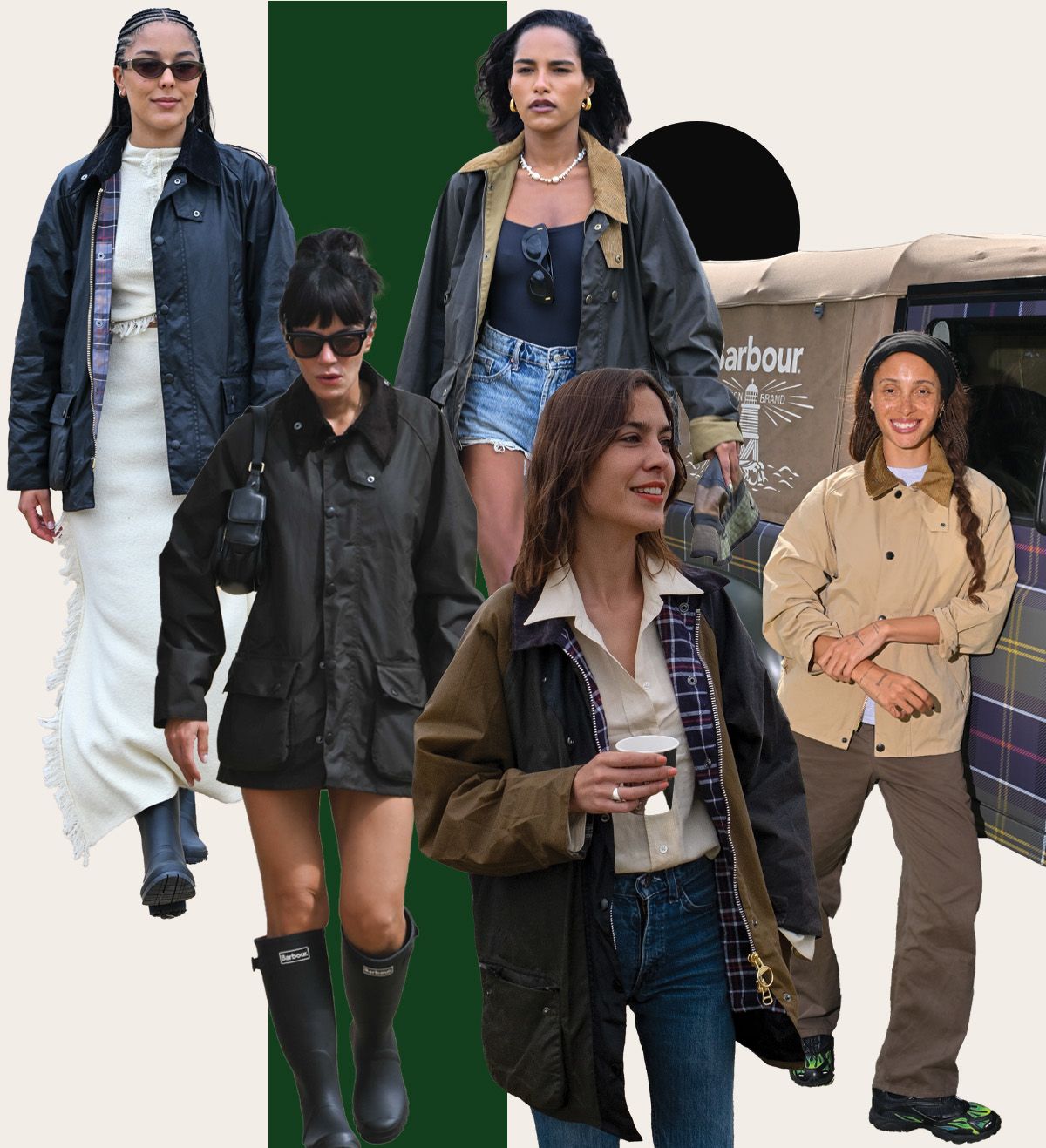
Posh and privilege aside, the Barbour look also became fashionable via another great British institution: Glastonbury Festival. Often paired with Hunter wellies and a sequinned minidress, it served to keep legions of muddy festival-goers warm, dry and stylish. Amongst them, Lily Allen, who played the Pyramid Stage in 2007 wearing an oversized black Barbour and vintage pink dress whilst clutching a can of Strongbow, and Alexa Chung, whose long-standing love affair with Barbour jackets was honoured with a series of sold-out collaborations which began in 2013.
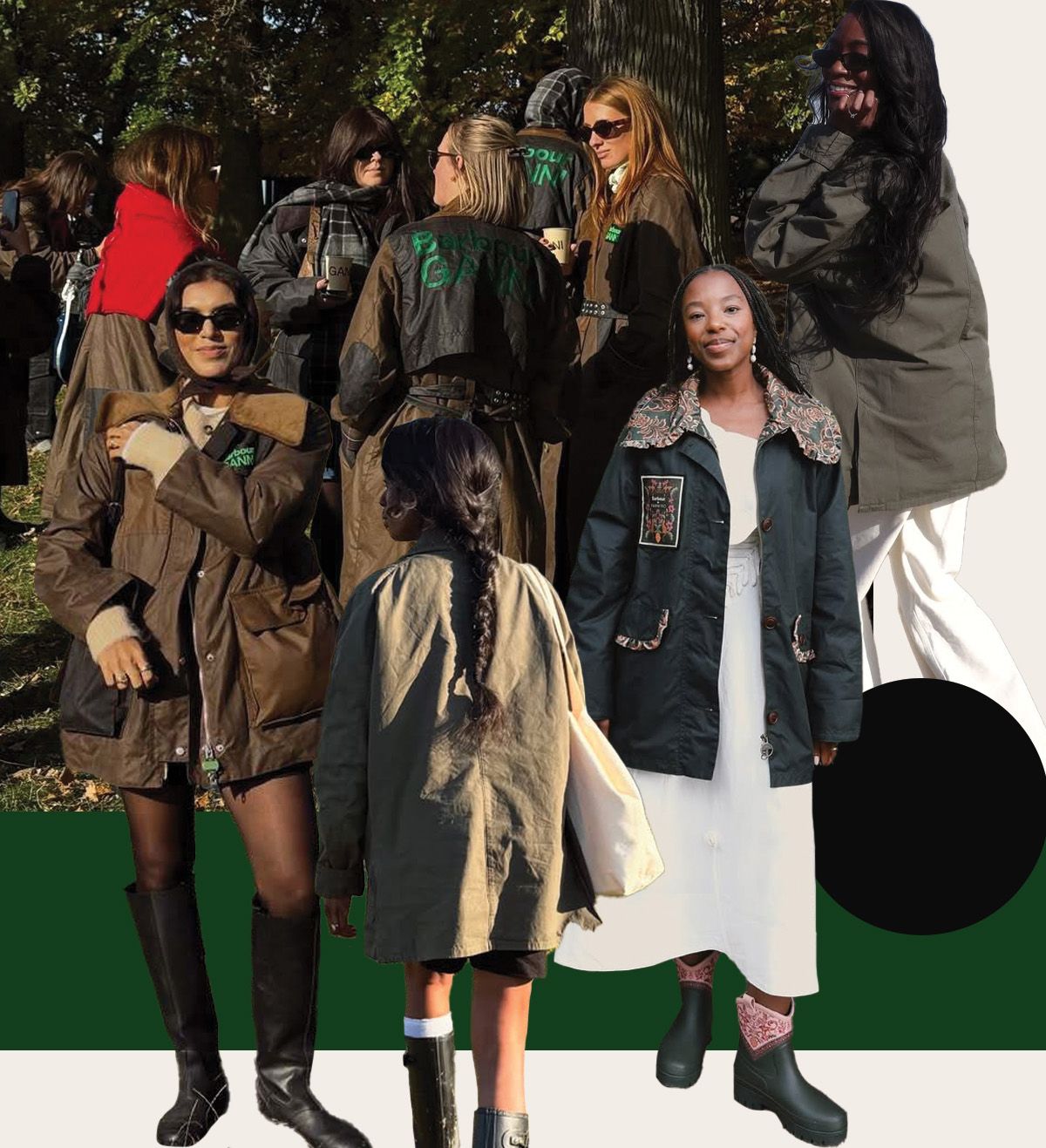
Today, Barbour averages around 6 to 7 collaborations per year. Recent hits include partnerships with luxury brand Erdem, streetwear extraordinaires Supreme and Scandi-cool label Ganni. Most recently, Barbour has joined forces with Brazilian brand Farm Rio, known for its vibrant, colourful prints, whilst this season will see the launch of Paul Smith Loves Barbour; the coming together of two quintessentially British fashion brands. Inspired by livestock competitions and farm shows, the collaboration takes a playful approach to country classics, with unusual shades of waxed cotton, patchwork constructions and a recurring Friesian cow motif.
How to Tell Your Beaufort from Your Beadnell
Think there’s only one Barbour wax jacket? Wrong! There are, in fact, three original styles: the Bedale, the Beaufort and the Border. All were designed by Dame Margaret Barbour and made the brand a household name in the 1980s. The collection has expanded since to include modern classics, such as the Beadnell and the Spey. They're all best-sellers, all weather-proof and all-year-round staples, subtly different in their own ways.